Let's be honest for a second, shall we?
If you've ever watched a toddler climb a bookshelf like it personally offended their ancestors, dump an entire basket of blocks just to hear the crash, or strip off their pants mid-morning tea for absolutely no reason at all, you already know the truth. Toddlers are not "naughty." Toddlers are not "difficult." Toddlers are tiny scientists running very loud, very messy experiments on the laws of physics, gravity, and how far they can push your boundaries.
And here's the plot twist: the environment you build around them is either going to work with those urges or spend all day fighting them. Guess which one leaves you standing at pickup time looking like you've been in a war zone?
Let's talk about how to design toddler spaces that actually support natural toddler behaviour instead of trying to bulldoze it into submission.
First, Can We Retire the Word "Naughty"?
Please. I'm begging.
What looks like chaos to us is actually a toddler's brain doing exactly what it's supposed to do at this age: exploring, testing, moving, dumping, climbing, and occasionally screaming into the void because someone else touched the yellow truck. Toddler behaviour isn't a behaviour problem. It's a developmental to-do list, and they're living it every day in their completely expected toddler way.
The job isn't to stop the urges. The job is to build an environment so good at meeting those urges that the toddlers barely have time to climb the bookshelf, because there's a far more interesting crate-stacking situation happening three metres away.

Learning Through Play Isn't a Buzzword — It's Basically Toddler Currency
We all know the phrase "learning through play" gets thrown around so often it's practically wallpaper in ECE circles. But here's the thing, for toddlers, play isn't the fun bit after the learning. Play IS the learning. There is no separate "lesson time" happening in a toddler's brain. Every tip, tumble, dump, and repeat is a full-blown research project.
So when you're setting up your space, ask yourself:
“Does this invite investigation, or does it just look nice on Instagram?”
A gorgeously curated shelf with untouchable ceramic bowls is not an invitation. It's a museum exhibit. And toddlers do not do museums.
Try this instead:
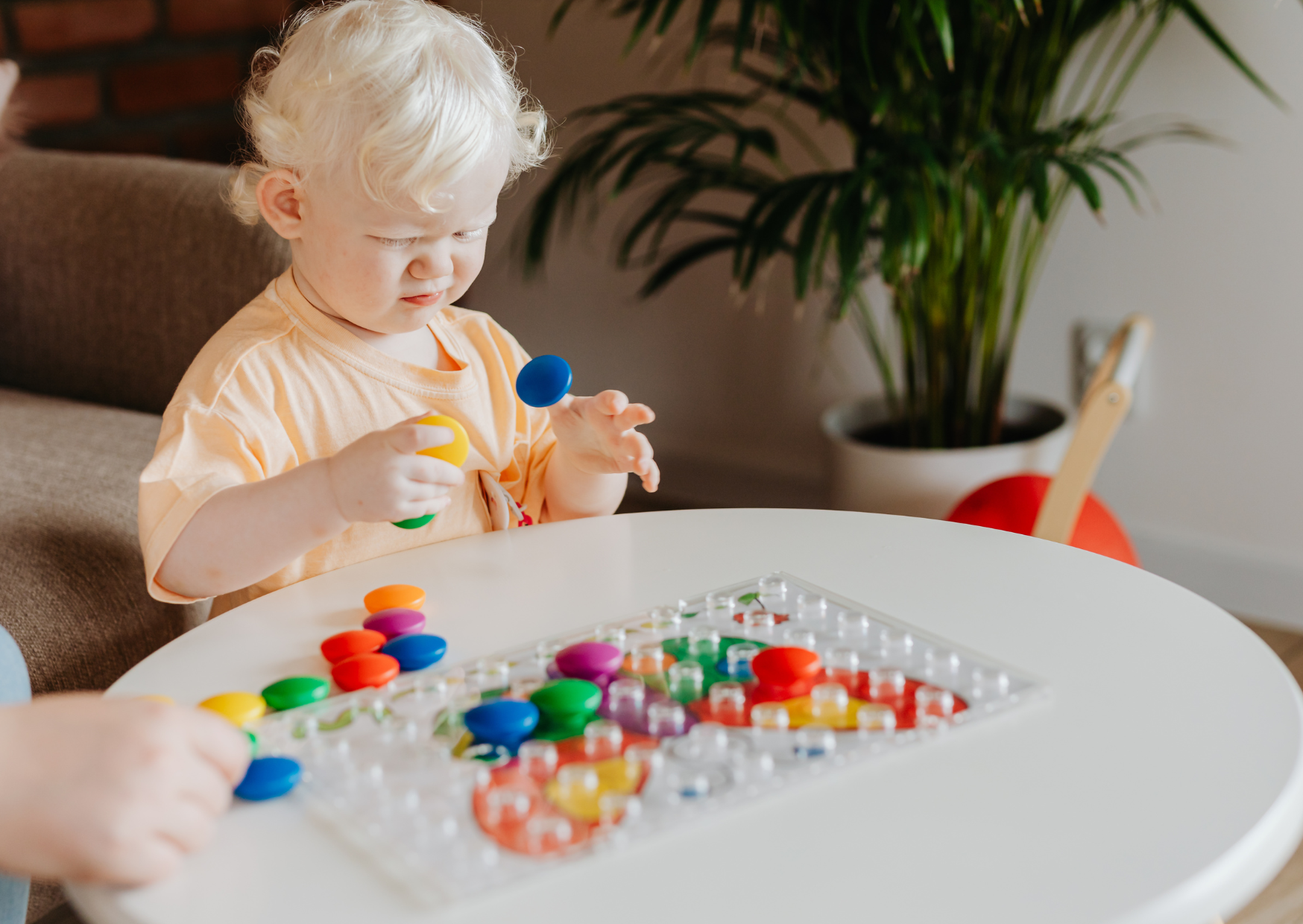
- Open-ended materials over single-purpose toys (a basket of fabric scraps will outlast any battery-operated toy, guaranteed)
- Loose parts they can dump, fill, stack, and destroy without you wincing
- Repetition-friendly setups, because if a toddler finds joy in doing something 47 times in a row, who are we to interrupt a genius at work?
Design for the Urges, Not Against Them
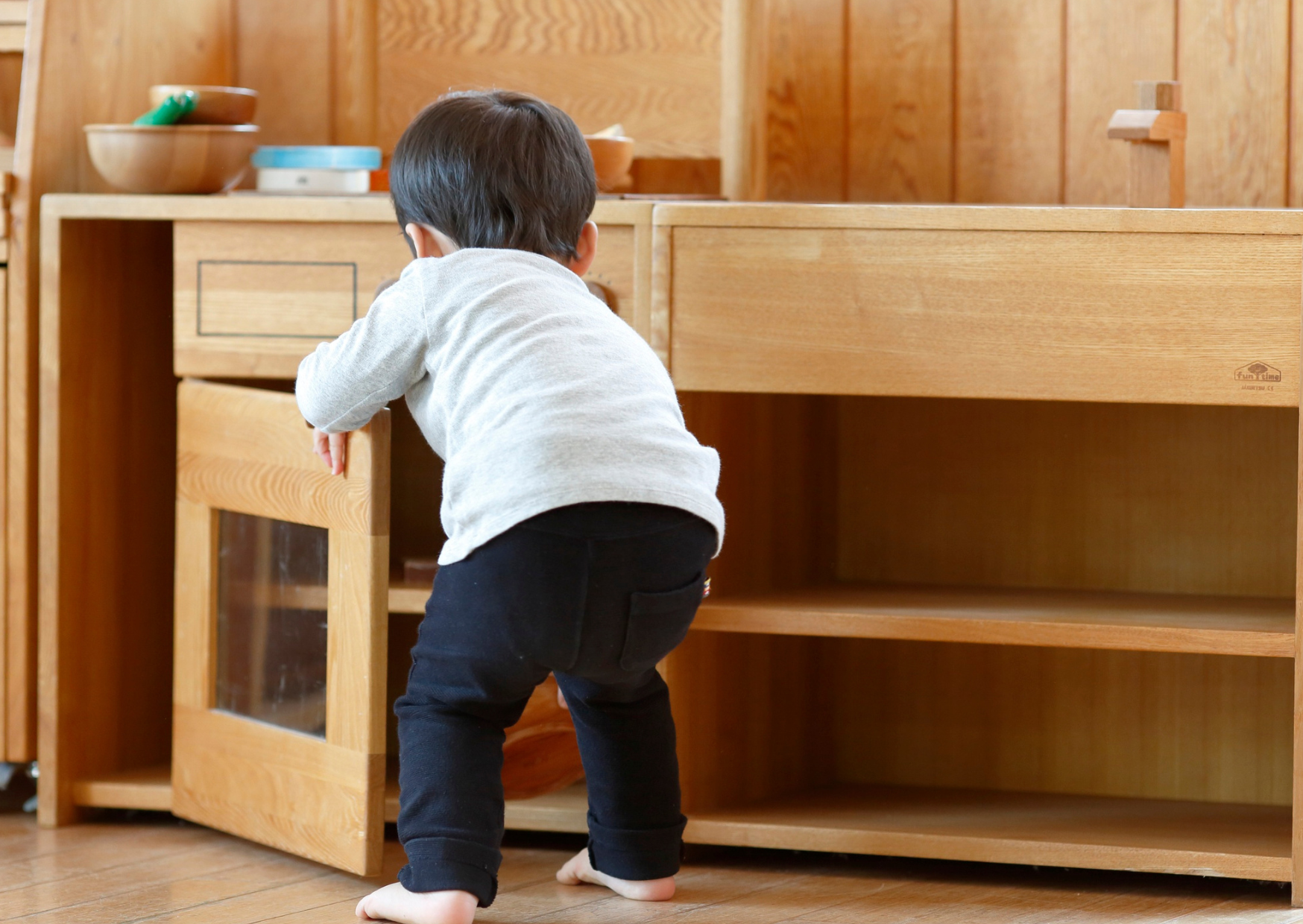
Toddlers have urges. Big ones. Loud ones. The urge to climb. The urge to dump. The urge to push things (including, sometimes their friends). Instead of spending your day as Urge Police, design an environment that gives those urges somewhere legitimate to go.
- The climbers need climbing structures, not just "no climbing on the chairs" reminders on repeat.
- The dumpers need containers, baskets, and things that are meant to be emptied, not accidentally the entire art supply cupboard.
- The movers need space to run, crawl, roll, and generally exist like small, joyful chaos agents. Because a toddler with nowhere to move is a toddler who's about to find somewhere to move, and it will not be where you'd choose.
Basically: if you're not giving the urge a job, the urge will find its own job. And it will not consult you first.
Social Emotional Regulation: The Real MVP Skill
Here's where it gets less sassy and slightly more real for a second. Underneath all the dumping and climbing and glorious chaos, toddlers are working on something enormous: social emotional regulation. They are learning, for the very first time, how big feelings work. Spoiler alert: they're doing it with a brain that is still very much under construction and absolutely zero prior experience.
This is why the "just calm down" approach has approximately a 0% success rate with toddlers. You cannot logic a two-year-old out of a meltdown about the wrong colour cup. Their nervous system isn't asking for logic. It's asking for a steady, calm adult to help their body find its way back to okay.
Environments that support social emotional regulation include:
- Cosy, low-stimulation corners where a toddler can retreat when the world gets too loud (for them or for you, honestly)
- Predictable routines, because toddlers thrive on knowing what happens next. Surprises are for birthdays, not transitions
- Soft, sensory-friendly materials that offer comfort without needing words a toddler doesn't have yet
Co-Regulation: You Are the Environment Too
Here's a truth bomb: your calm nervous system is part of the room's furniture. Co-regulation is the foundation underneath every single toddler self-regulation skill that will ever develop, and it works exactly how it sounds. A toddler borrows your calm until they can grow their own.
This means when the block tower comes crashing down (again) and the wailing begins (again), your steady voice, your grounded body language, and your unhurried presence are doing more heavy lifting than any resource on the shelf. You are, quite literally, the co-regulation station.
Practical co-regulation moves that actually work:
- Get down to their level — physically, not just figuratively
- Narrate feelings simply: "You're really cross the tower fell down"
- Offer your calm before you offer a solution — toddlers can't problem-solve while flooded with big feelings, and neither can most adults, if we're honest
- Breathe. Slowly. Obviously. Sometimes modelling the breath is the whole intervention.
The Real Secret? Stop Trying to Control the Chaos — Choreograph the curriculum
You will never eliminate toddler energy and urges. Frankly, if you did, something would be very wrong. The goal isn't a chaos-free room. It's a room where the energy has somewhere useful to go where dumping has a basket, climbing has a structure, big feelings have a cosy corner, and every single "urge" toddlers walk in with each morning has a legitimate outlet built right into the environment.
Do that, and something magical happens.
The bookshelf climbing slows down. The mealtime mahem get shorter. And you get through your day feeling less like a toddler wrangler and more like the calm, confident educator you actually are. The one who built a space smart enough to work with toddlers instead of constantly against them.
Because at the end of the day, toddlers aren't trying to make our lives harder. They're just trying to figure out how the whole world works, one dumped basket at a time.
Our job? Build the kind of environment that lets them do exactly that. Safely, joyfully, and with slightly fewer bookshelf-related incidents.

Angela Bush
Share your thoughts...