
How can mentors and leaders enhance newly graduated teachers’ resilience for their early career success?
What does teacher resilience mean?
Resilience is a personal attribute that supports an individual’s ability to bounce back from challenges or adversities that they face in their daily life. Dispositions that tend to be associated with resilience are persistence, determination, grit and the ability to overcome significant hurdles in life, which can foster further qualities such as optimism, hope, motivation and passion. However, teacher resilience is more complex. It is woven into the experiences that challenge and develop a teacher during their daily practice so that a foundation of consistent emotional, physical, social and intellectual well-being is built (Day & Gu, 2013; Gu & Day, 2007). Teacher resilience is not just about teachers surviving through challenges, instead it influences the perception of challenges and allows teachers to thrive despite the range of adversities that may happen daily.
Why is this important for newly graduated teachers?
As we are aware, the early childhood teacher role is complex, dynamic, rewarding and challenging all at the same time. There is a wide range of personal and contextual demands of the role can impact on teachers' physical, emotional and mental well-being, which can be quite overwhelming for beginning teachers, particularly if they are not prepared for the realities of the role (Gu & Day, 2013; Heilala et al., 2024; Mansfield et al., 2016). In fact, the demands of teaching have left high percentages of educators globally feeling a loss of job satisfaction, stress, and burnout, which has meant teachers have intentions to leave the profession within the first five years of graduating. Bull et al. (2024) recorded 33.5% of all early childhood teachers they connected with having intentions to leave the profession in Australia alone. Similar research has found as high as 50% of all teachers resign within the first 5 years of graduating (Dönmez et al., 2018). Authors exploring high turnover rates of early childhood teachers have even gone as far as to say that teachers work life is in a “state of emergency” (Heilala et al., 2024, p. 491). Therefore, resilience becomes necessary for graduating teachers to be able to navigate the demands and realities of the role. Further, as resilience sustains well-being, it means teachers have higher capabilities to navigate resources that can support them to thrive in their teaching careers, leading to greater confidence, competence and an overall positive outlook on their careers (Gu & Day, 2013; Hascher et al., 2021; Ungar, 2012).
Practical applications for enhancing newly graduated teacher’s resilience
The ways that mentors and leaders might enhance beginning teachers’ resilience was discovered through previous research I undertook on factors that could enhance or limit resilience and well-being for newly graduated teachers. Interestingly, participants as part of this study provided very specific, practical things mentors and leaders could do to support resilience, which could be categorised into two separate strands:
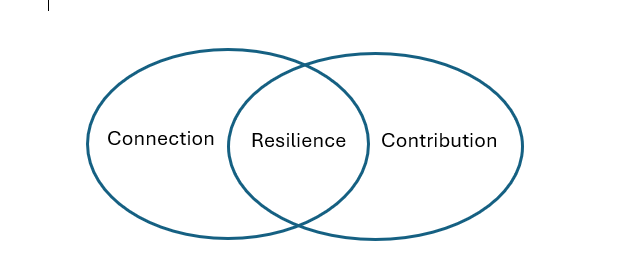
Connections:
- Supportive and emotionally safe relationships: While it may seem like a simple and obvious first step, there needs to be a balance between the formal development of beginning teachers versus informal ‘get-to-know-you’ times. If mentors and leaders can start with initiating and building a relationship, newly graduated teachers are more likely able to cope with the realities and demands of the role when they begin their careers. Further, beginning teachers will feel safe coming to their mentor or leader for support or to ask questions.
- Actively listening to teachers: Interestingly, participants in my study had felt that at times their ideas were not listened to, which caused feelings of being undervalued. Mentors and leaders might feel like suggestions from beginning teachers are not worth exploring due to their own expertise, experience or knowledge about why ideas might not work. However, if newly graduated teachers are not given the opportunity to explore and experiment with ways they can use their knowledge, they won’t be able to develop their understanding of the skills that they obtain. Sometimes, for mentors and leaders, it is about trusting the process beginning teachers go through and being open to opportunities when they are presented.
- Make time for regular check-ins: In my findings, it was interesting to see a stark difference between how supported newly graduated teachers felt when they had regular check-ins with their mentor as opposed to when they did not have regular check-ins. This is a recommended area of further research into how a structured mentorship program specifically enhances teacher resilience, which would hopefully demonstrate to higher management and stakeholders the importance of creating space and time to nurture newly graduated teachers in their professional learning journey.
- Have compassion and understanding: Having a relationship with the newly graduated teacher that is compassionate, empathetic and understanding will continue to enhance their resilience because they feel they are in a safe space to grow as a teacher. Interestingly, the way that newly graduated teachers felt when asking for time off the floor for things like sick leave was a contentious topic that most participants in my research discussed. If beginning teachers feel unsafe, even for being able to practice self-care for their well-being, this will cause harm to their overall resilience. If leaders could look at teacher’s time off as an investment into their well-being, their resilience will be bolstered.
- Offer specific feedback and praise regularly: It was very clear in my findings that newly graduated teachers felt motivated and valued when their mentor or leaders gave them specific feedback and praise about their teaching. If mentors can contribute to beginning teachers’ professional practice through detailed comments on what they have noticed and what they liked about their teaching, they feel reassured about what they are doing well, which will help them to grow in their confidence.
- Make sure expectations are clear: A further way to enhance newly graduated teacher resilience by building their confidence is ensuring that expectations are clear. When mentors and leaders have consistent and clear expectations that are suitable for a beginning teacher, this will ensure that they are not overwhelmed by the transition into their careers. This may mean having a structured induction program that includes time with the beginning teacher to explain the daily routines, centre processes and procedures. This could even mean having clear information on a beginning teachers’ progression in their teaching.
- Commitment to the profession: Lastly, if mentors and leaders model passion, optimism and enthusiasm, this can enhance newly graduated teachers’ resilience because it inspires them to continue to develop their professional practice. This may mean mentors and leaders need to reflect on their own resilience and well-being as well as their ability to support others well-being. If a mentor is in a season where they cannot share their genuine love for the profession, they may need time and space for their own self-care before supporting beginning teachers.
Reference list:
Bull, R., Cumming, T., Wong, S., & McFarland, L. (2024). The impact of work-related wellbeing and workplace culture and climate on intention to leave in the early childhood sector. Early Childhood Research Quarterly, 69, 13–24.
Dönmez, Ö., Karasulu, M., Asantogrul, S., & Zembat, R. (2018). Examination of Occupational Resilience Beliefs of In-Service and Pre-Service Early Childhood Education Teachers According to Different Variables. International Online Journal of Education and Teaching, 5(4), 724-733.
Gu, Q., & Day, C. (2007). Teachers resilience: A necessary condition for effectiveness. Teaching and Teacher Education: An International Journal of Research and Studies, 23(8), 1302–1316. https://doi.org/10.1016/j.tate.2006.06.006
Gu, Q., & Day, C. (2013). Challenges to teacher resilience: conditions count. British Educational Research Journal, 39(1), 22–44.
Hascher, T., Beltman, S., & Mansfield, C. (2021). Teacher wellbeing and resilience: towards an integrative model. Educational Research, 63(4), 416 – 439.
Heilala, C., Lundkvist, M., Santavirta, N., & Kalland, M. (2024). Work demands and work resources in ECEC -- Turnover intentions explored. European Early Childhood Education Research Journal, 32(3), 481–494. https://doi.org/10.1080/1350293X.2023.2265597
Mansfield, C. F., Beltman, S., Broadley, T., & Weatherby-Fell, N. (2016). Building resilience in teacher education: An evidenced informed framework. Teaching & Teacher Education, 54, 77–87. https://doi.org/10.1016/j.tate.2015.11.016
Ungar, M. (2012). Social ecologies and their contribution to resilience. In M. Ungar (Ed.), The social ecology of resilience: a handbook of theory and practice (13 – 31). Springer.

Joy McLelland
Joy’s role in the Pastoral Support team has grown her interest in supporting teacher wellbeing and professional learning in order for tamariki to have the best possible outcomes.
Share your thoughts...