There is a child in your room right now who is showing you something. Maybe they are loud about it - dysregulated, running, refusing, in full meltdown on the mat while the rest of the day swirls rapidly around them. Maybe they are quiet about it - withdrawn, flat, enduring. Either way, they are showing you something, and the question worth sitting with is not "how do I make this stop?" but rather "what is this child trying to tell me?"
That shift, from management to meaning-making, is where everything begins. And it is harder than it sounds, because we are tired, because the room is full, and because most of us were never adequately prepared for the extraordinary diversity of minds and nervous systems that walk through our doors every single day. So if you have ever stood in the middle of a hard moment and thought I don't know what to do - that is not a confession of inadequacy. That is an honest reckoning with the reality of this work, and it is the beginning of something important.
Loris Malaguzzi, the heart and mind behind Reggio Emilia, spoke of children as capable, competent, and full of potential, already communicating, already expressing, already reaching for connection in the ways available to them. When we hold neurodiverse children inside that same lens, we start to see behaviour not as a problem to be solved but as a language to be learned. A child who bites, bolts, shuts down, or screams is not being difficult. They are being overwhelmed. Their nervous system - wired differently, processing the world at a different frequency - is doing its best in an environment that was largely not specifically designed for them. The lights, the noise, the unpredictability, the social complexity of twenty or more, other small humans all moving and talking and needing, you can see how it can be genuinely unbearable. What looks like defiance is often dysregulation. What looks like refusal is often fear. And what looks like a child who doesn't care is often a child who cares so much they have gone somewhere safer inside themselves.
Stuart Shanker's Self-Reg framework invites us to look beneath the behaviour, to ask not "what is wrong with this child?" but "what stress is driving this, and how can I help them find their way back to calm?" Shanker reminds us that a dysregulated child cannot learn, cannot connect, and cannot respond to reason. The limbic brain is in charge, and the limbic brain does not hear your words, it feels your energy, your body, your breath. This is why the most powerful thing you can do in a hard moment is not think of a better strategy. It is to regulate yourself first.
- Soften your shoulders.
- Lower your voice.
- Slow your breath.
Your nervous system speaks to theirs before any words are exchanged, and a calm presence beside a dysregulated child is one of the most profound forms of support we can offer. This is co-regulation and it is not a soft option. It is the evidence.
From there, we can think about the practical. Not as a checklist, but as a repertoire - things to reach for, try, adapt, and return to.
Start with the environment before you start with the child.
Walk into your room as if you have never been in it before.
- What do you hear?
- What does the light do?
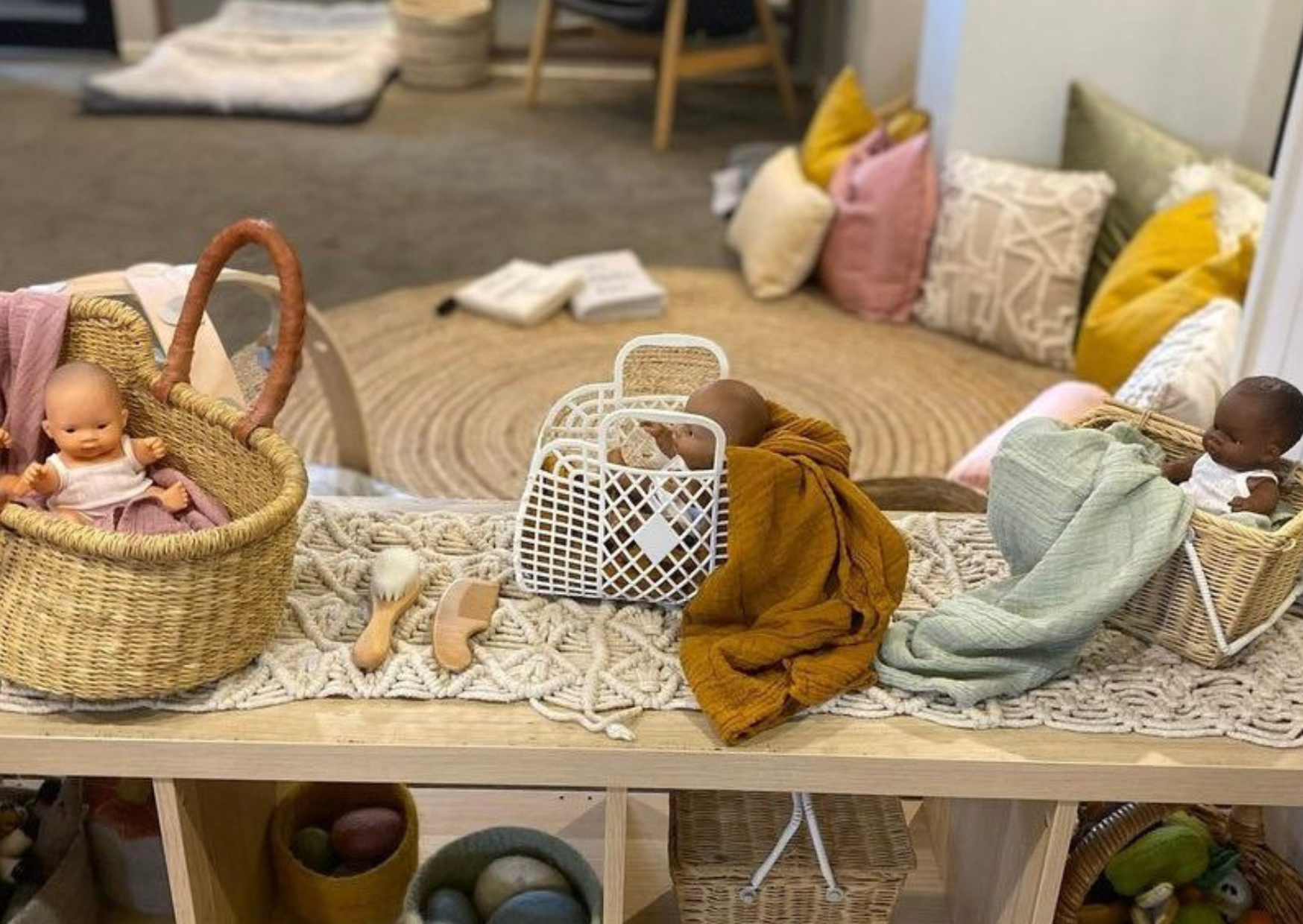
Many neurodiverse children are receiving that environment as far more intense than you are. Consider whether there is a consistently quieter corner available, whether visual clutter could be simplified, whether at least part of the room offers genuine sensory refuge alongside stimulation. Build a visual schedule and actually use it — not a display that lives on the wall, but a living tool you visit together before every transition. Name what is finishing. Name what is coming. Let the child move the marker themselves. That sense of agency - I know what is happening and I can see it - is deeply regulating for children whose anxiety spikes in unpredictability.
Give warnings before transitions, every time, without exception.
A five-minute warning, a two-minute warning, a consistent signal. For children with ADHD or ASD who are deeply engaged in play, being pulled out without warning is not inconvenient. It is distressing, and the dysregulation that follows is a consequence of that distress, not an attitude.
- Slow your language right down, and then slow it down again.
- One instruction at a time.
- A genuine pause between each one.
Research in speech-language pathology tells us that processing time for many neurodiverse children can be two to three times longer than we expect - and when we repeat an instruction before that time has passed, we reset the clock entirely.
Waiting ten full seconds is skilled, not passive.
Offer choice wherever you can,
Not open-ended choice, which can itself be overwhelming, but two choices with similar outcomes. "Do you want to walk or hop to the bathroom?" "Red cup or blue?" Choice is a regulator. It restores a sense of control to a child who experiences so much of their day as things happening to them. Learn this child's sensory profile and respond to it - some children need more input, more movement, more body-based feedback, and will find it in ways that may not be appropriate if we don't offer alternatives. Heavy work such as carrying, pushing, digging, kneading, can be genuinely regulating and built into the natural rhythms of the day. Other children are sensory-avoidant and need quieter, simpler spaces they can access freely, without having to ask permission every time.
You could use Leah Kuypers' Zones of Regulation as a shared language
Blue, green, yellow, red, so children begin to develop the vocabulary to name their own state before it becomes a crisis.
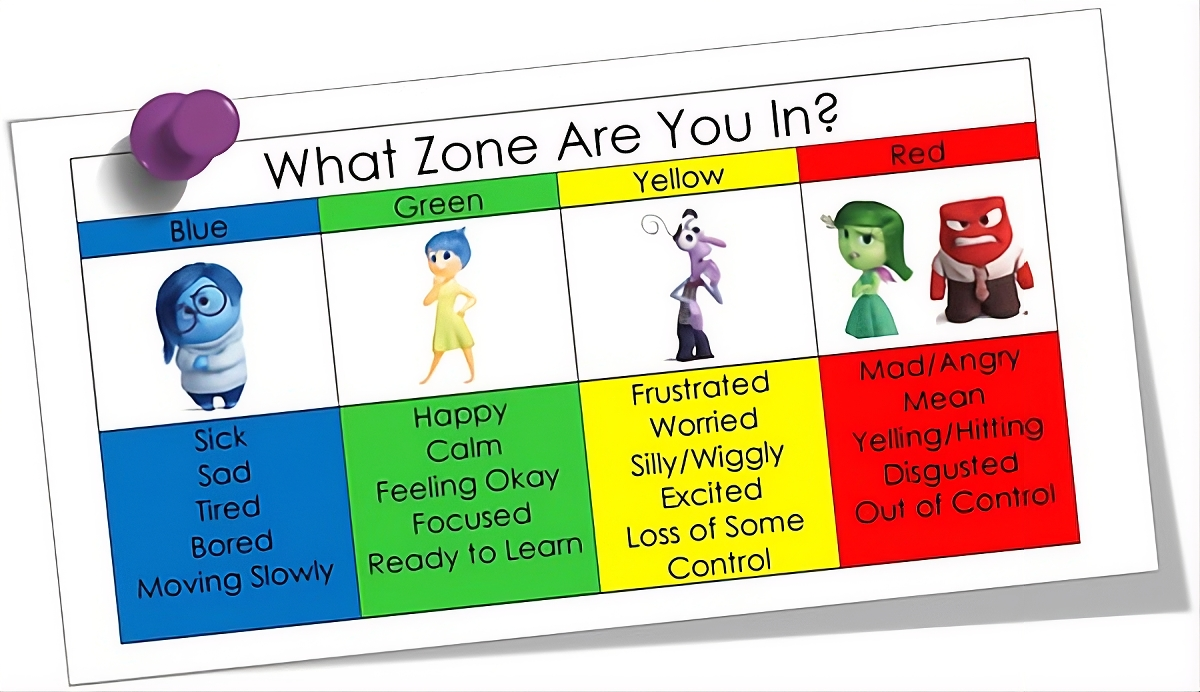
Image Sourced from: https://zonesofregulation.com/
Narrate what you observe, warmly and without interrogation. "I can see your body is feeling really big right now." "It looks like that was hard." This is not just language support, it is attunement, and for children who struggle to identify their own emotions, having a calm adult mirror their experience is building a scaffold they can eventually use themselves. And when you notice growth, name it specifically. Not "good job", but "I noticed you moved to the quiet corner when it got loud. That was you knowing what your body needed." That kind of specific, genuine acknowledgement builds a child's story about who they are and what they are capable of.
Consider the child’s WHOLE world experience
Bronfenbrenner's ecological systems theory reminds us that a child does not exist in isolation - they exist inside layers of context, and the early childhood setting is one of the most immediate and powerful of those layers. Which means the families of neurodiverse children are not supplementary to your work with the child. They are central to it. They have lived with this child through every hard morning, every breakthrough, every strategy that worked and every one that didn't. And too often they arrive at your door already braced, because they have been called to pick up too many times, given reports full of what their child cannot do, made to feel like the problem is theirs to carry home.
What would it mean to approach them differently?
To ask not just "how was the weekend?" but "what does a regulated day look like at home, and what can we learn from that?" New Zealand's ECE Curriculum - Te Whāriki, weaves the child, whānau, and community into a single interconnected fabric, and in doing so reminds us that we are never educating a child in isolation.
In Australia, the Early Years Learning Framework reminds us that children’s learning and wellbeing are inseparable from the relationships and contexts that surround them. The framework places strong emphasis on partnerships with families, recognising that parents and caregivers hold deep knowledge about their child’s temperament, sensory needs, and ways of regulating.
When families feel genuine partnership they share things that transform our understanding of their child and strategies that works beautifully at home. A piece of their child's story that reframes something we thought we understood. Go to those conversations with curiosity, not just concern.
Remember this - here is what that child knows, even if they cannot say it. They know when someone is trying. They know when someone is curious about them rather than frustrated by them. They know when the room feels like it was made for them, and they know when it wasn't. And slowly, through the accumulation of small moments of being seen and met and understood, they begin to build a story about themselves - about who they are in the world, and whether the world has a place for them.
You are writing part of that story every single day. Make it one worth reading.
Jessica Thomson
Share your thoughts...